
The Wild Truth About Your Housecat (And What a Lioness Taught Me About Your Tabby)
Paul Flotron has vaccinated a full-grown lioness at Crown Ridge Tiger Sanctuary and coaxed a 9-pound Siamese into a carrier. His conclusion? The feline mind is the same at every size — fiercely independent, biologically precise, and profoundly misunderstood. This is the post that changes how you see your cat forever.

By Paul Flotron — Founder, Owner & Director, Creature Comforts Great & Small, LLC
Have you ever looked at your cat lounging on the sofa — one eye half-open, tail flicking with quiet authority — and thought, "You act like you rule the jungle"?
You are not far off. Not even a little.
As an animal expert and the founder of Creature Comforts Great & Small, LLC, my career has taken me from the warmth of St. Louis living rooms to the raw, electric atmosphere of wildlife preserves. I have handled everything from newborn kittens trembling in the palm of my hand to apex predators that could end a conversation in under a second. One of the most defining milestones of my professional life was stepping into the enclosure at Crown Ridge Tiger Sanctuary in Sainte Genevieve, Missouri, to administer vaccinations during a full wellness exam on a full-grown African lioness.
Let me tell you something that will change the way you look at your cat forever:
Whether you are positioning yourself to safely medicate a 300-pound lioness or coaxing a 9-pound Siamese into a plastic carrier, the fundamental physics of feline behavior are exactly the same.
Cats — all cats, from the mightiest lion to the most pampered Persian — are fiercely independent, biologically precise, and among the most deeply misunderstood animals on the planet. Today, we are pulling back the curtain on the biggest myths surrounding cat behavior, and showing you why understanding your cat's "inner wildcat" is the single most powerful thing you can do for their health, happiness, and longevity.
🦁 From the Sanctuary to Your Living Room: A Career Built on Feline Truth
Before we dismantle the myths, let me paint you a picture.
The morning I walked into that enclosure at Crown Ridge Tiger Sanctuary, the air was thick with the unmistakable musk of a large predator. The lioness — powerful, watchful, and radiating a calm that was somehow more intimidating than any display of aggression — tracked my every movement with eyes that have been reading the intentions of living things for millions of years of evolutionary refinement.
There was zero room for error. The work required absolute stillness of body, precise and deliberate movement, a clinical understanding of feline anatomy, and an almost meditative command of my own nervous system. One misread signal, one moment of hesitation or overconfidence, and the entire dynamic could shift in an instant.
That experience — and the thousands of hours of hands-on work with both exotic and domestic animals that preceded and followed it — is the foundation upon which every single home visit I make is built.
When I walk through your front door to care for your cat, I am not just a pet sitter. I am a trained, experienced animal professional who has earned the trust of creatures that do not give it easily.
🐱 The Great Cat Myths — Shattered
Myth #1: Cats Are Low-Maintenance and Antisocial
The Myth: Cats are solitary, self-sufficient creatures who prefer to be left entirely alone. They are the "easy" pet — perfect for busy households that want companionship without the commitment.
The Truth: This is perhaps the most damaging misconception in all of domestic pet care, and it costs cats dearly every single day.
Cats are not antisocial. They are selectively social — and that distinction is everything. They communicate in a language of extraordinary subtlety: the slow blink of trust, the position of a tail, the angle of an ear, the deliberate choice to sit near you rather than on you. These are not the behaviors of an animal that does not care. These are the behaviors of an animal that cares so deeply, and so precisely, that they will not waste their affection on anyone who has not earned it.
When left without adequate mental stimulation, environmental enrichment, and structured routine, cats do not simply get bored. They suffer. That suffering manifests as destructive scratching, litterbox avoidance, compulsive over-grooming, and a chronic, invisible anxiety that slowly erodes their quality of life — often for years before an owner realizes something is wrong.
Your cat is not low-maintenance. Your cat is quietly asking for more than you know how to give — and a professional who speaks their language can bridge that gap.
Myth #2: Purring Always Means Happiness
The Myth: If your cat is purring, they are content, relaxed, and completely at ease. The purr is the universal signal that all is well.
The Truth: Cats purr when they are happy — and they also purr when they are frightened, injured, in pain, or actively dying.
The purr is not a simple happiness meter. It is a complex self-regulatory mechanism. Research suggests that the specific frequency of a cat's purr — typically between 25 and 150 Hz — may actually promote bone density, accelerate healing, and reduce pain. In other words, cats may purr because they need to heal themselves, not because everything is fine.
I have seen cats purring through severe illness. I have seen cats purring in the final moments of their lives. Relying solely on a purr to assess your cat's wellbeing is like relying solely on a smile to assess a person's mental health — it tells you something, but it does not tell you everything.
Reading a cat correctly requires reading the whole cat: the dilation of the pupils, the tension in the jaw, the position of the whiskers, the set of the shoulders, the subtle flick of the tail tip. This is a skill that takes years to develop — and it is one of the most valuable things a professional caregiver brings to your home.
Myth #3: Indoor Cats Don't Need Professional Monitoring
The Myth: If your cat lives indoors, they are safe, sheltered, and entirely self-sufficient when you are away. A bowl of food, a clean litterbox, and a window to look out of — what more could they need?
The Truth: Indoor cats are masters of concealment. And that concealment can be genuinely dangerous.
In the wild, cats are simultaneously predators and prey. Showing weakness — limping, vocalizing pain, moving slowly — is a survival liability that attracts the attention of larger predators. This instinct does not disappear simply because your cat lives in a climate-controlled apartment. It is hardwired into their biology, and it means that by the time most cats display obvious signs of illness or distress, the condition has often been developing for days, weeks, or even months.
It takes a highly trained, deeply experienced eye to notice the microscopic shifts in a cat's daily behavior that signal something is wrong: the food bowl that is slightly less empty than usual, the water intake that has subtly increased, the grooming routine that has quietly changed, the way they hold their body when they sit. These are the signals that separate a professional from a well-meaning neighbor who agreed to stop by.
🔬 The Science of the Feline Mind: What the Lioness Confirmed
When I was preparing to administer medications to that lioness at Crown Ridge, the sanctuary's veterinary team walked me through the behavioral protocols with the precision of a surgical briefing. Every movement was choreographed. Every contingency was anticipated. Every member of the team understood that this animal's comfort, safety, and trust were the non-negotiable foundation of the entire procedure.
What struck me most profoundly was how familiar it all felt.
The same principles I apply when approaching a fractious domestic cat — the deliberate, unhurried movement; the avoidance of direct eye contact during initial approach; the careful attention to the animal's body language at every step; the absolute refusal to rush — were the exact same principles governing our work with a 300-pound apex predator.
The scale was different. The stakes were higher. But the language was identical.
This is what seventeen years of working with animals across the full spectrum of size and temperament has given me: a fluency in the universal language of feline trust. And it is a language I speak every single day, in the homes of St. Louis families who have entrusted me with the animals they love most.
🏆 Why Elite Professional Care Is Not a Luxury — It Is a Necessity
Here is the question I want you to sit with:
If your cat needed daily insulin injections, would you trust that to someone who learned from a YouTube video?
If your cat was hiding under the bed, refusing to eat, and you could not figure out why, would you want someone who "loves animals" — or someone who has spent nearly two decades learning to read the signals that most people never even know to look for?
At Creature Comforts Great & Small, LLC, we bring a level of clinical precision and behavioral expertise to domestic pet care that simply does not exist anywhere else in St. Louis.
What sets us apart:
Clinical Precision in Medical Administration Whether your cat requires daily insulin, complex oral medications, subcutaneous fluid therapy, or the careful management of a chronic condition, our background with exotic animals ensures that your pet receives safe, calm, stress-free medical care — administered by someone who has done this at the highest possible level.
Behavioral Fluency That Goes Beyond the Surface We do not just observe your cat — we read them. We decode the subtle behavioral cues that signal stress, discomfort, or the early onset of illness, and we respond with the expertise and calm authority that allows your cat to feel genuinely safe in their own home.
The Gold Standard of In-Home Pet Care Your cat is not a low-maintenance afterthought. They are a living, breathing, emotionally complex creature who deserves care that matches their sophistication. At Creature Comforts Great & Small, LLC, we have built our entire practice around that belief — and we have spent seventeen years proving it, one extraordinary animal at a time.
🐾 Your Cat Is a Wildcat in a Smaller Package. Treat Them Like One.
The next time your cat fixes you with that ancient, inscrutable gaze — the one that seems to look straight through you and out the other side — remember what you now know.
Behind those eyes is a creature shaped by millions of years of evolutionary precision. A creature that communicates in a language most people never learn to hear. A creature that deserves not just love, but understanding — the deep, expert, hard-earned understanding that only comes from a lifetime spent in the company of animals great and small.
That is what we offer at Creature Comforts Great & Small, LLC. That is what we have always offered.
And your cat — your small, magnificent, utterly untameable domestic wildcat — deserves nothing less.
Ready to give your cat the elite, expert care they deserve? Contact Creature Comforts Great & Small, LLC today to schedule your complimentary Meet & Greet consultation — and discover what truly professional pet care looks like.
Paul Flotron is the founder, owner, and director of Creature Comforts Great & Small, LLC, serving the St. Louis metropolitan area for over seventeen years. His experience spans domestic pets, exotic animals, and wildlife sanctuaries — including hands-on work at Crown Ridge Tiger Sanctuary in Sainte Genevieve, Missouri.
Explore Topics
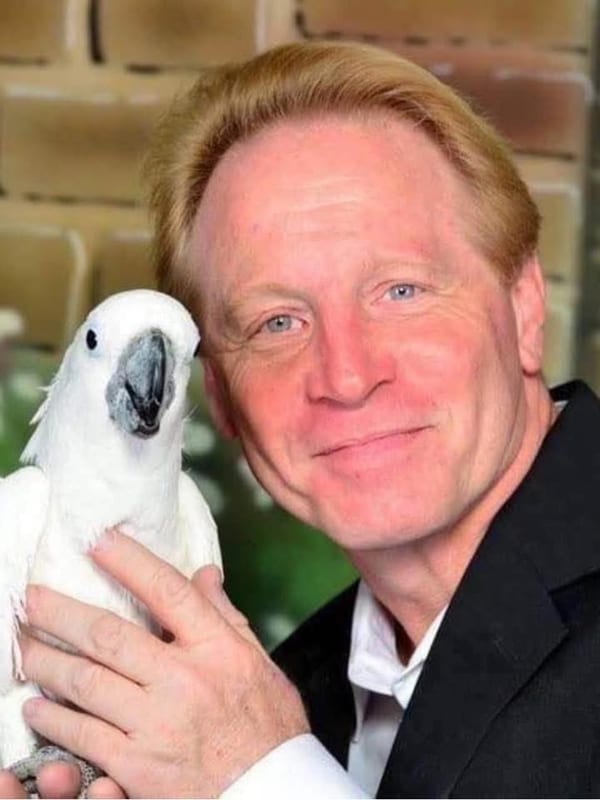
Written by
Paul Flotron
Owner & Founder of Creature Comforts Great & Small, LLC — St. Louis's premier in-home pet care specialist with 17 years of experience caring for animals of every species, size, and temperament.


