
Monsters Under the Bed: Decoding Halloween Spooks and Fear Aggression in Dogs
Halloween brings out the ghouls, ghosts, and goblins — but for our four-legged family members, the real monsters are often born from fear, anxiety, and stress. Paul Flotron, founder of Creature Comforts Great & Small, LLC, pulls back the curtain on canine fear aggression and reveals the expert blueprint for keeping your dog safe, calm, and confident this spooky season.

By Paul Flotron — Founder, Owner & Director, Creature Comforts Great & Small, LLC
Halloween brings out the ghouls, ghosts, and goblins — but for our four-legged family members, the real monsters are often the ones born from fear, anxiety, and stress.
As the founder, owner, and director of Creature Comforts Great & Small, LLC, I have spent years studying the intricate nuances of canine behavior. I have worked alongside apex predators at exotic sanctuaries, guided fearful rescue animals back from the edge of behavioral collapse, and sat quietly on living room floors with trembling dogs whose owners had no idea why their beloved companion was falling apart. What I have learned — through thousands of hours of hands-on experience — is this:
What looks like aggression is almost always a dog screaming for help.
While we see masks and costumes as harmless fun, our dogs perceive a shifting, unpredictable world where the rules they have spent their entire lives learning have suddenly, inexplicably changed. This Halloween, I want to pull back the curtain on canine fear, identify the hidden triggers lurking in your neighborhood, and give you a state-of-the-art behavioral blueprint to transform your dog's terror into unshakeable confidence.
👻 The Anatomy of Canine Fear: Three Distinct Types
To combat fear, we must first understand how it operates. In veterinary behavioral science, we categorize a dog's defense mechanisms into three distinct — and critically important — categories:
1. Surface Fear
This is an immediate, acute reaction to a specific, identifiable threat. Your dog catches a glimpse of a person in a Michael Myers mask, recognizes it as profoundly abnormal, and reacts instantly to ensure their own survival. Surface fear is sharp, sudden, and often explosive — but it is also the most straightforward to address because the trigger is clear.
2. Generalized Anxiety
This is a chronic, low-level state of apprehension that never fully switches off. A dog living with generalized anxiety is in a constant state of anticipation — perpetually waiting for the next bad thing to happen. Their nervous system is permanently dialed to eleven. Halloween, with its relentless parade of unpredictability, can push an already anxious dog to a complete behavioral breaking point.
3. Situational Stress
This occurs when a perfect storm of overwhelming environmental factors — noise, crowds, flashing lights, unfamiliar scents — converges and pushes a dog past their emotional threshold. Think of it as a circuit breaker tripping. The dog is not "bad." The dog is not "aggressive." The dog's system has simply been overloaded beyond its capacity to cope.
Understanding which type of fear your dog is experiencing is the critical first step toward helping them.
🎃 The Spooky Triggers: What Activates the Fear?
During Halloween, the environment transforms rapidly and radically. Things that seem perfectly ordinary to us become profound psychological triggers for a sensitive dog. Here is what your dog is actually experiencing on October 31st:
Altered Silhouettes Costumes change human shapes, obscure facial expressions, and eliminate the normal body language cues that dogs rely on to read our intentions and assess our trustworthiness. To your dog, a neighbor in a Darth Vader costume is not your neighbor at all — it is an unrecognizable, threatening entity.
Unpredictable Movement Children darting across lawns in flowing capes, people leaping out from darkened porches, mechanical decorations suddenly lurching to life — each of these events can trigger an immediate, involuntary flight-or-fight response in a dog who has no context for what they are witnessing.
The Doorbell Dilemma A constantly ringing doorbell combined with a revolving door of strangers violates your dog's territorial boundaries over and over again, in rapid succession, for hours. For a dog whose job it is to protect the home, this is an exhausting, maddening, never-ending assault on their sense of security.
Sensory Overload Dogs experience the world primarily through scent and sound — and Halloween is a sensory assault on both fronts. The combination of flickering strobe lights, eerie sound effects, the sharp chemical scents of face paint and synthetic costumes, and the overwhelming sweetness of mountains of candy can completely overwhelm a dog's extraordinarily sensitive sensory system.
🛡️ Unmasking Fear Aggression: When Fear Turns Fierce
Here is the truth that every dog owner must understand — and it may be the most important thing you read this Halloween season:
Fear aggression is not dominance. It is not defiance. It is desperation.
When a dog growls, lunges, or snaps, they are rarely trying to be "dominant" or "mean." In the vast majority of cases, aggression is a dog's last-resort attempt to create distance between themselves and the thing that terrifies them. It is a survival mechanism — ancient, hardwired, and entirely logical from the dog's perspective.
The critical moment arrives when a dog feels they cannot flee. When they are cornered in a hallway, restrained on a leash, or trapped in a room with no escape route, the option to run is removed. And when flight is impossible, the only option left is to fight — to make the monster go away through sheer force of will and tooth.
This is why so many Halloween incidents happen on leash, at the front door, or in confined spaces. The dog is not being unpredictable. The dog is being completely predictable — they are doing exactly what their biology demands when all other options have been exhausted.
The Expert Blueprint: How to Combat Fear Aggression
To safely guide your dog through their fears, you need a proactive, methodical behavioral strategy. Here is the framework we use at Creature Comforts Great & Small, LLC — the same approach I have applied from exotic sanctuaries to suburban living rooms:
[ Identify Trigger ] ➔ [ Maintain Safe Distance ] ➔ [ Counter-Condition (Reward) ] ➔ [ Build Confidence ]
Step 1: Build a "Ghost-Free" Sanctuary
Before the first trick-or-treater rings your doorbell, establish a secure, quiet room as far from the front door as possible. This is your dog's personal fortress of calm.
- Run a white noise machine or play calming classical music (Through a Dog's Ear is a research-backed favorite) to mask the chaos outside.
- Provide a high-value enrichment activity — a stuffed Kong, a lick mat loaded with peanut butter, or a puzzle toy — to keep their mind productively occupied.
- Place their favorite blanket or an unwashed piece of your clothing in the space. Your scent is the most powerful calming signal in your dog's world.
- Consider a calming wrap (such as a Thundershirt) or a veterinary-approved calming supplement if your dog has a history of severe anxiety. Consult your veterinarian well before Halloween night.
Step 2: Implement Counter-Conditioning
Counter-conditioning is the science of changing your dog's emotional association with a frightening trigger — from "that thing is terrifying" to "that thing predicts something wonderful."
Here is how it works in practice: If your dog catches a glimpse of a costumed figure from a safe distance across the yard, immediately and enthusiastically deliver a piece of roast chicken, real liver, or whatever your dog considers the most extraordinary treat on earth. Repeat. Repeat again. Repeat until your dog's head swivels toward the costume and their tail begins to wag.
You want them to arrive at one unmistakable conclusion: "Seeing that strange figure means the most amazing things happen to me!"
This is not bribery. This is neuroscience. You are literally rewiring the emotional circuitry of your dog's brain — replacing a fear response with an anticipatory joy response. It takes time, consistency, and patience, but the results are transformative.
Step 3: Honor the Threshold
This is perhaps the most critical — and most frequently violated — principle in fear rehabilitation:
Never force your dog to "face their fears."
Dragging a terrified dog up to a scary decoration, pushing them toward a costumed stranger, or insisting they "get used to it" does not build confidence. It destroys trust. It teaches your dog that you will not protect them when they are afraid. And it almost always makes the fear worse — sometimes dramatically so.
The concept of threshold refers to the distance at which your dog can perceive a trigger while remaining alert but not frantic. Work at the threshold — close enough that the trigger is visible, far enough that your dog can still think, breathe, and accept a treat. As confidence builds over sessions, the threshold naturally shrinks.
Step 4: Decode the Body Language Before It Escalates
The most dangerous moment in fear aggression is not the growl — it is the ten seconds before the growl, when your dog is sending you clear, desperate signals that you may be missing entirely.
Learn to recognize the early warning signs of stress escalation:
- Lip licking when there is no food present
- Yawning when the dog is not tired
- Whale eye — the whites of the eyes becoming visible
- Tucked tail or tail held rigidly low
- Pinned-back ears flattened against the skull
- Stiffened posture — the dog becomes unnaturally still
- Panting when the temperature does not warrant it
- Refusing treats they would normally devour — this is a significant red flag
When you observe these signals, do not wait for the growl. Calmly and confidently remove your dog from the situation. The growl is a warning — a gift, actually, because it means your dog is still communicating. A dog who has been punished for growling stops warning before they bite. Honor the warning. Act on the early signals.
🐾 Changing the Narrative: A Halloween Worth Celebrating
This Halloween, let's make a collective vow to protect our pets from the real psychological monsters of fear and anxiety.
The holiday does not have to be a night of terror for your dog. With thoughtful preparation, a safe sanctuary space, and the behavioral tools outlined above, you can transform October 31st from your dog's worst nightmare into just another quiet evening — while the rest of the neighborhood celebrates outside.
By understanding your dog's triggers, honoring their emotional limits, and treating their fear with the patience, desensitization, and positive reinforcement they deserve, you are not just surviving Halloween. You are building a foundation of trust and confidence that will serve your dog — and your relationship with them — for the rest of their life.
Stay safe, stay positive, and remember: a confident dog is a happy dog.
Want to learn more about how Paul Flotron and the Creature Comforts team approach animal behavior with world-class expertise? Read From Lions to Lapdogs: How 17 Years of Expert Animal Husbandry Means Your Pet's Medical Needs Are Always in Safe Hands — and discover why experience at the exotic sanctuary level translates directly to extraordinary care for your beloved companion.
For a deeper look at the science of keeping your pet thriving for the long haul, explore Living to 20 and Beyond: The Cutting-Edge Science Rewriting the Rules of Pet Care.
Explore Topics
Written by
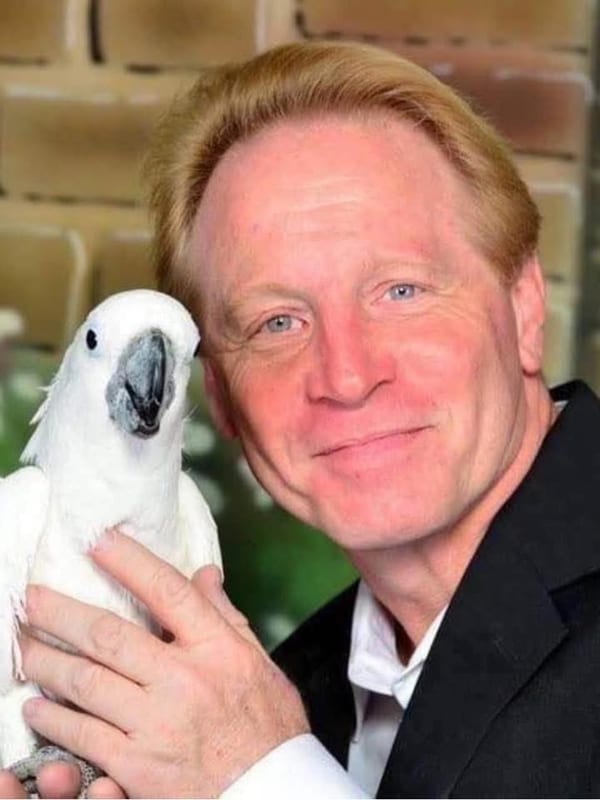
Paul Flotron
Owner & Founder of Creature Comforts Great & Small, LLC — St. Louis's premier in-home pet care specialist with 17 years of experience caring for animals of every species, size, and temperament.


